Every year, thousands of devotees travel to Uttarakhand to seek blessings at Kedarnath, Badrinath, Gangotri and Yamunotri. But what happens when these Himalayan temples close for winter? Where do the deities go, and can pilgrims still have darshan?
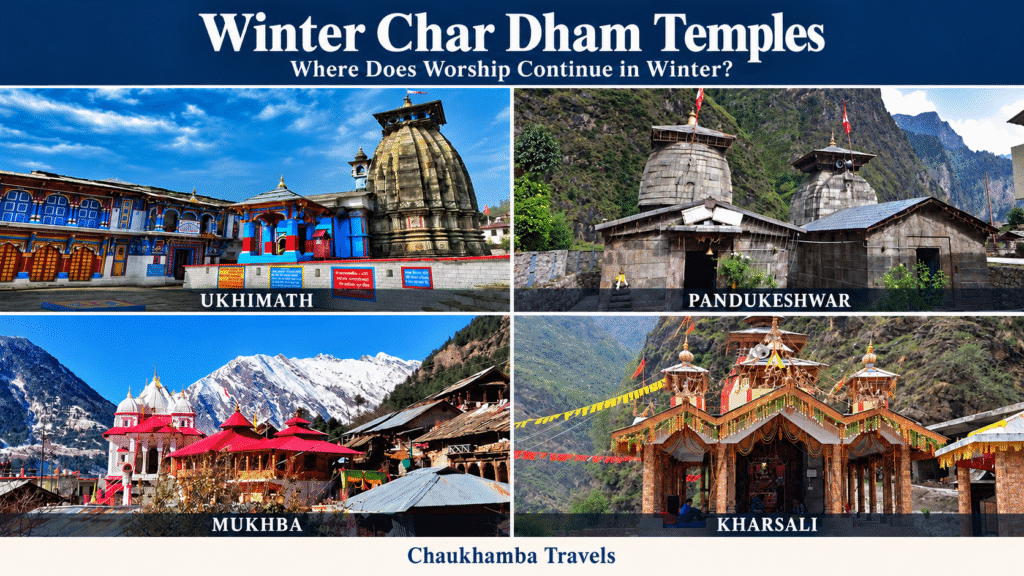
Quick Answer: When the Char Dham temples close for winter, worship continues at their traditional winter seats. Kedarnath's ceremonial image is worshipped at Omkareshwar Temple in Ukhimath, Badrinath-associated winter worship takes place at Yogdhyan Badri in Pandukeshwar, Goddess Ganga is worshipped at Mukhba near Harsil, and Goddess Yamuna at Kharsali.
This seasonal pilgrimage is known as the Winter Char Dham Yatra or Sheetkal Char Dham Yatra. It allows devotees to participate in the religious traditions associated with the four Dhams even while the main high-altitude shrines remain closed.
However, winter darshan is different from visiting the original Char Dham temples. This guide explains the winter worship locations, their religious significance, traditional processions, travel routes, accessibility and essential planning information.
Why Do the Char Dham Temples Close During Winter?
The four main Char Dham shrines are located in the Garhwal Himalayas, where winter brings freezing temperatures, snowfall and challenging mountain conditions.
These temples follow seasonal opening and closing ceremonies according to their established religious traditions.
When their doors, traditionally called kapat, close for winter, ceremonial images or sacred representations associated with the deities are taken to designated winter worship locations.
Daily prayers and rituals continue according to the traditions of each shrine.
The seasonal movement is more than a response to mountain weather. It is a longstanding religious custom involving temple ceremonies, priests, local communities and the cultural heritage of Uttarakhand.
What Is Winter Char Dham Yatra?
Winter Char Dham Yatra is a pilgrimage to the traditional winter temples associated with Uttarakhand's four Char Dham shrines.
Rather than travelling to the main temples at Yamunotri, Gangotri, Kedarnath and Badrinath, devotees visit the designated locations where winter worship takes place.
These destinations are often called Char Dham winter seats or Sheetkalin Gaddi Sthal.
Some winter temples may be easier to approach than their main high-altitude counterparts because they do not require the same long pilgrimage treks. Nevertheless, winter mountain roads and local walking conditions still require careful planning.
Where Are the Four Char Dham Deities Worshipped in Winter?
The official Uttarakhand Tourism Winter Char Dham Circuit identifies four principal winter pilgrimage destinations.
| Main Shrine | Winter Worship Location | District |
|---|---|---|
| Kedarnath | Omkareshwar Temple, Ukhimath | Rudraprayag |
| Badrinath | Yogdhyan Badri, Pandukeshwar | Chamoli |
| Gangotri | Ganga Temple, Mukhba (Mukhwa) | Uttarkashi |
| Yamunotri | Kharsali (Khushimath) | Uttarkashi |
Important: Badrinath also has a related winter religious tradition at Narsingh Temple in Joshimath. Pandukeshwar and Joshimath are different locations with distinct roles.
Where Does Lord Kedarnath Go in Winter?
Omkareshwar Temple, Ukhimath — Winter Seat of Kedarnath
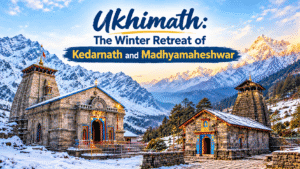
When the main Kedarnath Temple closes for winter, the ceremonial image associated with Lord Kedarnath is brought to Omkareshwar Temple in Ukhimath, Rudraprayag district.
The journey takes place through a traditional ceremonial procession accompanied by religious rituals and local participation.
Once the winter worship arrangements begin, devotees can offer prayers at Omkareshwar Temple.
Ukhimath is also associated with the winter worship of Lord Madhyamaheshwar, one of the sacred Panch Kedar temples.
The town therefore holds religious significance beyond its connection with Kedarnath's winter worship.
Can You Visit Kedarnath in December or January?
The main Kedarnath Temple normally remains closed during December and January. Devotees should not expect darshan inside the closed high-altitude shrine.
Instead, Kedarnath-associated winter darshan takes place at Omkareshwar Temple in Ukhimath after the ceremonial procession arrives and the seasonal worship arrangements begin.
Unlike the regular Kedarnath pilgrimage, visitors do not need to complete the Gaurikund-to-Kedarnath trek for winter worship at Ukhimath.
However, local walking, temple steps and winter road conditions should still be checked.
How Do You Reach Omkareshwar Temple?
A general road route from Rishikesh follows:
Rishikesh → Devprayag → Srinagar → Rudraprayag → Ukhimath
Travellers should check local road conditions and plan mountain driving during daylight wherever practical.
For more detailed information, read our Ukhimath winter temple guide.
Where Is Lord Badrinath Worshipped During Winter?
Yogdhyan Badri, Pandukeshwar — Badrinath Winter Worship
Badrinath's winter traditions involve two important locations: Pandukeshwar and Joshimath.
When the main Badrinath Temple closes, the festival images of Uddhav and Kuber associated with Badrinath are traditionally worshipped at Yogdhyan Badri Temple in Pandukeshwar.
Pandukeshwar is located in Chamoli district and lies along the route towards Badrinath.
Yogdhyan Badri is also part of the sacred Sapta Badri tradition associated with Lord Vishnu.
The Shri Badarinath Kedarnath Temple Committee provides information about Badrinath's religious traditions and winter worship arrangements.
What Is the Role of Narsingh Temple in Joshimath?
Joshimath, also known as Jyotirmath, has a separate religious role associated with Badrinath's winter season.
The Adi Shankaracharya gaddi associated with Badrinath is traditionally brought to Narsingh Temple in Joshimath during the seasonal closure.
The distinction is:
- Yogdhyan Badri, Pandukeshwar: Winter worship associated with the festival images of Uddhav and Kuber.
- Narsingh Temple, Joshimath: Associated with the winter tradition of the Adi Shankaracharya gaddi.
These temples are not interchangeable. Anyone intending to visit both should list Pandukeshwar and Joshimath as separate destinations.
Can You Visit Badrinath During Winter?
The main Badrinath Temple normally remains closed during winter.
Devotees can consider visiting the associated worship locations in Pandukeshwar and Joshimath, subject to current temple arrangements and local accessibility.
Before travelling to Pandukeshwar, confirm whether the approach road is accessible in the prevailing weather conditions.
For information about the original pilgrimage destination, explore our Badrinath Dham travel guide.
Where Does Goddess Ganga Go When Gangotri Temple Closes?
Mukhba Village — Winter Abode of Goddess Ganga
After Gangotri Temple closes, the ceremonial image of Goddess Ganga is brought to Mukhba village, also written as Mukhwa, near Harsil in Uttarkashi district.
Mukhba lies in the Bhagirathi Valley and is closely connected with the traditional worship of Goddess Ganga.
The seasonal procession from Gangotri is an important occasion for local communities and devotees.
During winter, worship continues at the designated Ganga temple in Mukhba.
Can You Visit Mukhba and Harsil During Winter?
Mukhba is located in the Harsil region, allowing visitors to combine winter worship with an exploration of Harsil Valley when conditions permit.
The region is known for mountain scenery, forests, traditional villages and the Bhagirathi River.
However, a Harsil Valley visit does not automatically include darshan at Mukhba.
Travellers should confirm the temple stop, final village approach and accommodation availability before departure.
To understand the normal pilgrimage to the main shrine, read our Gangotri Dham travel guide.
Where Does Goddess Yamuna Go During Winter?
Kharsali Village — Winter Abode of Yamunotri
When Yamunotri Temple closes for winter, the ceremonial image of Goddess Yamuna is brought to Kharsali, also known as Khushimath, in Uttarkashi district.
The village is located in the Yamunotri region near Janki Chatti and is associated with the traditional worship of Goddess Yamuna and Lord Shani Dev.
Kharsali is also known for its traditional Himalayan village architecture and religious heritage.
Is Trekking Required for Yamunotri Winter Darshan?
No. A visit to Goddess Yamuna's winter worship location at Kharsali does not require the regular trek to the main Yamunotri shrine.
However, the final village approach may involve walking, steps or uneven surfaces.
Visitors travelling with senior citizens should check the nearest accessible vehicle point and any assistance needed.
What Is the Doli Yatra in Winter Char Dham?
The Doli Yatra is a traditional ceremonial procession associated with the seasonal movement of a deity's festival image or sacred representation between the main shrine and its winter worship location.
Depending on the temple's customs, the procession may include prayers, traditional music, priests, devotees and participation from local communities.
The ceremony marks an important transition in the annual religious calendar.
Since each shrine follows its own schedule, the winter worship arrangements for all four Dhams do not necessarily begin on the same date.
How Is Winter Char Dham Different from Regular Char Dham Yatra?
Both pilgrimages are associated with Uttarakhand's four sacred Dhams, but the actual destinations and travel requirements differ.
| Regular Char Dham Yatra | Winter Char Dham Yatra |
|---|---|
| Visits the four main Himalayan shrines. | Visits their designated winter worship destinations. |
| Takes place during the main temple opening season. | Takes place during the seasonal closure of the main shrines. |
| Includes the regular Kedarnath and Yamunotri approaches. | Does not require those same main-shrine treks. |
| Follows the traditional pilgrimage circuit. | Follows a different route between the winter temples. |
| Travel conditions depend on the main-season pilgrimage arrangements. | Travel depends on winter roads, cold weather and temple accessibility. |
Remember: A winter pilgrimage does not provide entry to a closed main shrine. Visitors wishing to see the original temples should plan their trip during the officially announced main season.
When Is the Best Time to Visit Winter Char Dham Temples?
The winter worship period generally begins after the main shrines close in autumn and continues until their reopening in spring.
The most suitable dates depend on the arrival of the ceremonial processions, darshan arrangements and weather conditions.
Can You Visit Winter Char Dham Temples in December?
December normally falls within the winter worship season.
However, snowfall, freezing temperatures and temporary road restrictions can affect particular destinations.
Confirm the temple's darshan arrangements and local access for your specific travel dates.
Is January or February Suitable for Winter Darshan?
January and February can bring particularly cold conditions and snowfall to parts of the Garhwal Himalayas.
Winter worship generally continues during these months, but road access can change quickly.
Travellers should keep their plans flexible and avoid assuming that every winter temple will be accessible after heavy snowfall.
Do All Four Winter Temples Begin Worship on the Same Date?
No. Each main shrine follows its own closing ceremony and seasonal procession.
Confirm the procession's arrival and darshan arrangements for each temple you plan to visit.
How Do You Reach the Winter Char Dham Temples?
Haridwar, Rishikesh and Dehradun are common starting points for onward travel to the winter worship locations.
The appropriate route depends on the temples selected and the prevailing road conditions.
Route to Kedarnath Winter Temple
Rishikesh → Devprayag → Srinagar → Rudraprayag → Ukhimath
Route to Badrinath Winter Worship Locations
Rishikesh → Devprayag → Rudraprayag → Karnaprayag → Joshimath → Pandukeshwar
Route to Gangotri Winter Temple
Rishikesh → Uttarkashi → Harsil region → Mukhba
Route to Yamunotri Winter Temple
Dehradun → Barkot → Janki Chatti region → Kharsali
Travel Note: These routes are general geographical references. They do not guarantee uninterrupted road access during winter. Confirm restrictions, diversions and final vehicle access locally before setting out.
How Many Days Are Needed for Winter Char Dham Yatra?
The duration depends on your starting point, selected temples, accommodation and prevailing road conditions.
Visiting a single winter temple may require a shorter journey than completing a circuit across all four destinations.
| Pilgrimage Interest | Suggested Planning Approach |
|---|---|
| Kedarnath winter darshan | Focus on Omkareshwar Temple in Ukhimath. |
| Badrinath winter worship | Visit Pandukeshwar and consider Joshimath separately. |
| Gangotri winter darshan | Plan Mukhba with a suitable overnight location. |
| Yamunotri winter darshan | Plan Kharsali after checking local access. |
| Complete winter circuit | Allow multiple travel days and contingency time. |
A complete winter circuit may take around a week or longer, depending on route accessibility, overnight stays and weather conditions.
This is a general planning estimate rather than a fixed itinerary.
For journeys covering multiple valleys, avoid excessively long driving days and consider allowing additional time for delays.
Is Registration Required for Winter Char Dham Yatra?
The registration arrangements used for the regular main-season Char Dham pilgrimage should not automatically be assumed to apply identically to ordinary darshan at the winter worship temples.
Winter temple visits have generally operated separately from the main-season registration system.
However, requirements and local instructions can change.
Before travelling, confirm the latest arrangements with the relevant temple administration or Uttarakhand authorities.
Carry valid photo identification and necessary travel documents.
Is Winter Char Dham Yatra Suitable for Senior Citizens?
Some winter temples may be more manageable for elderly pilgrims than the original high-altitude shrines because the regular Kedarnath and Yamunotri treks are not required.
Nevertheless, mountain driving, low temperatures, uneven paths and local walking requirements still need consideration.
What Should Families Check Before Travelling with Elderly Pilgrims?
- Walking distance from vehicle parking to the temple.
- Steps, slopes and uneven walking surfaces.
- Daily driving duration and appropriate rest stops.
- Accommodation facilities, including heating and hot water.
- Access to necessary medication and medical facilities.
- Weather warnings and possible travel disruptions.
Travellers with medical conditions that may be affected by cold, altitude or prolonged travel should obtain individual medical advice before departure.
For some families, visiting one or two winter temples may be preferable to completing the entire circuit.
What Should You Pack for Winter Char Dham Yatra?
Winter weather in Uttarakhand's mountains can vary significantly between destinations and times of day.
Useful travel essentials include:
- Thermal innerwear and layered warm clothing.
- An insulated jacket, woollen cap, gloves and warm socks.
- Comfortable footwear with good grip.
- Personal medication and a basic first-aid kit.
- Valid photo identification and travel confirmations.
- Power bank, charging cables and a torch.
- Drinking water and light snacks.
- Some cash for places with limited network connectivity.
Before choosing accommodation, ask about heating, hot water and bedding suitable for winter conditions.
What Should You Check Before Planning Winter Temple Darshan?
Checking current arrangements is one of the most important parts of planning a winter pilgrimage.
- Temple closure: Confirm the main shrine's seasonal closing ceremony.
- Doli arrival: Check whether the ceremonial procession has reached the winter destination.
- Darshan timings: Confirm worship hours and special arrangements.
- Road conditions: Check for snow, ice, closures or diversions.
- Accommodation: Confirm winter availability and essential facilities.
- Temple access: Check parking and local walking requirements.
- Weather: Review official forecasts and warnings.
For destination information, consult Uttarakhand Tourism.
For weather updates, visit the India Meteorological Department.
Frequently Asked Questions About Winter Char Dham Yatra
Where do Char Dham deities go after the temples close?
Winter worship associated with the four Dhams takes place at Ukhimath for Kedarnath, Pandukeshwar for Badrinath, Mukhba for Gangotri and Kharsali for Yamunotri. Joshimath also has a related Badrinath winter tradition.
Can we visit the main Char Dham temples in December?
The main temples normally remain closed in December. Devotees can instead consider the designated winter worship locations, subject to current arrangements and accessibility.
Where is Kedarnath's winter temple located?
Kedarnath-associated winter worship takes place at Omkareshwar Temple in Ukhimath, Rudraprayag district.
Where is Badrinath's winter seat?
Yogdhyan Badri in Pandukeshwar is the winter worship location for the festival images of Uddhav and Kuber associated with Badrinath. Narsingh Temple in Joshimath has a separate related role.
Where is Goddess Ganga worshipped during winter?
Goddess Ganga's ceremonial image is worshipped at Mukhba village near Harsil in Uttarkashi district.
Where is Goddess Yamuna worshipped during winter?
Goddess Yamuna's winter worship takes place at Kharsali village, also known as Khushimath, in Uttarkashi district.
Are Mukhba and Mukhwa the same place?
Yes. Mukhba and Mukhwa are alternative spellings for the village associated with Gangotri's winter worship.
Is snowfall guaranteed during Winter Char Dham Yatra?
No. Snowfall varies according to elevation, location and weather conditions. It is not guaranteed at every winter temple or on every travel date.
Does Winter Char Dham Yatra require trekking?
The regular Kedarnath and Yamunotri main-shrine treks are not required for visits to their winter seats. However, shorter walks, steps or uneven paths may still be involved.
Can senior citizens visit Winter Char Dham temples?
Some winter temple visits may be more manageable than the original high-altitude treks, but cold weather, mountain roads, walking requirements and individual health considerations remain important.
Can we visit only one winter temple?
Yes. Devotees can plan a pilgrimage to one or more winter worship destinations rather than completing the entire circuit.
Are the winter Char Dham temples accessible throughout winter?
Winter worship generally continues during the closure of the main shrines. However, temple schedules, road conditions and local accessibility may vary.
Conclusion: Where Does Char Dham Worship Continue in Winter?
The seasonal closure of Uttarakhand's four main Char Dham temples does not bring their associated religious traditions to an end.
Devotees can experience winter worship at Omkareshwar Temple in Ukhimath, Yogdhyan Badri in Pandukeshwar, the Ganga temple in Mukhba and the winter worship location of Goddess Yamuna in Kharsali.
Joshimath also remains significant in Badrinath's associated winter religious tradition.
Each destination offers an opportunity to understand the religious customs, temple heritage and village traditions of the Garhwal Himalayas.
Whether you intend to visit one winter temple or explore the complete circuit, checking the correct worship locations and current travel conditions will help you plan a more informed journey.
For more Uttarakhand pilgrimage information, travel routes and destination guides, explore Chaukhamba Travels.
Disclaimer: Temple timings, ceremonial processions, winter road access and local travel regulations are subject to change. Confirm current information with official temple authorities and local administration before travelling.