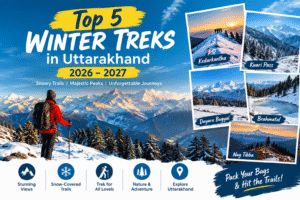
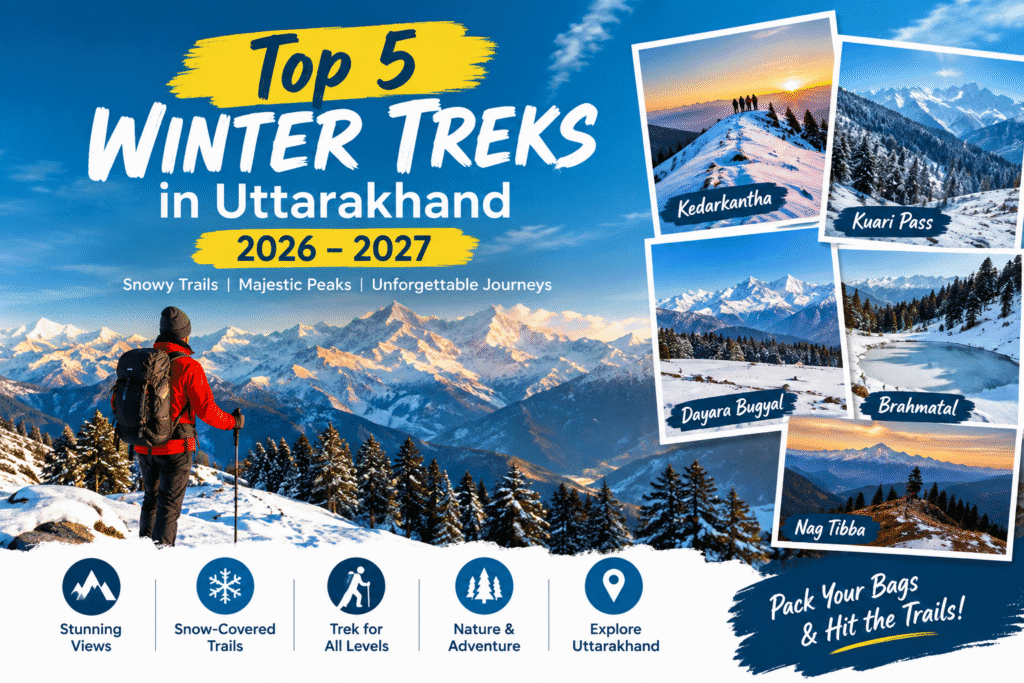
For a trekker, winter (December to March) offers the most exciting proposition in the months ahead. From the famous summit trail of Kedarkantha to the vast snowfields of Dayara Bugyal, Uttarakhand offers its share of winter treks for both novices and serious mountain enthusiasts.
The five treks one should consider for 2026-2027 winter are Kedarkantha, Kuari Pass, Dayara Bugyal and Brahmatal-Nag Tibba. They vary significantly in terms of altitude, duration and difficulty level, so it all depends on how much snow, altitude and physical challenge one is ready to take on.
Top 5 Winter Treks in Uttarakhand 2026–2027: At a Glance
| Trek | Approx. Highest Point | Typical Duration | Difficulty | Best For |
|---|---|---|---|---|
| Kedarkantha | 3,800 m / 12,500 ft | 5–6 days | Easy to Moderate | First snow summit trek |
| Kuari Pass | 3,815 m / 12,516 ft | 4–6 days | Moderate | Himalayan mountain views |
| Dayara Bugyal | Around 3,600–3,700 m | 4–6 days | Easy to Moderate | Snow meadows & beginners |
| Brahmatal | 3,734 m / 12,250 ft | 4–6 days | Easy to Moderate | Frozen lakes & snowy forests |
| Nag Tibba | 3,022 m / 9,915 ft | 2 days | Easy to Moderate | Weekend winter trek |
Kedarkantha – The Classic Winter Snow Trek
Kedarkantha stands out as one of the defining winter trekking experiences in Uttarakhand.
The trek begins from Sankri and winds its way through pine and oak forests, snowy clearings and alpine scenery to the Kedarkantha summit at about 3800 metres. It is classed as easy to moderate by Uttarakhand Tourism with an emphasis on the winter scenery.
Why Kedarkantha is special
The main attraction is that Kedarkantha offers the satisfaction of reaching a Himalayan summit without requiring technical mountaineering skills.
The hike from Sankri takes you towards Juda Ka Talab, a small high-altitude lake that can freeze during winter. From here, the trail winds through snow-laden forests towards the base camp.
The day of the summit is typically broken off early with the climb becoming steeper as you get close to the top. With a wide Himalayan vista stretching out before you, Uttarakhand Tourism notes peaks such as Swargarohini Bandarpoonch and Kala Nag are visible from the summit.
Another attraction of Kedarkantha is the variety of scenery it offers during winter. One day you could be walking through a dense forest, and the next morning you could be crossing a wide, snow-covered ridge.
Kedarkantha in winter 2026–27
The main winter season usually runs through the colder months with the likelihood of substantial snow increasing as winter progresses. December until February is typically the period trekkers are looking to get around to for snow, although it depends on the snowfall.
Based on the itinerary provided by the official Uttarakhand Tourism authority, the hike is around 20 km and the peak is at an altitude of approximately 3,800 m.
This trek is well suited to those who want to experience their first snow-covered Himalayan summit.
Kuari Pass – For Big Himalayan Views
If the summit experience defines Kedarkantha, Kuari Pass is all about mountain views.
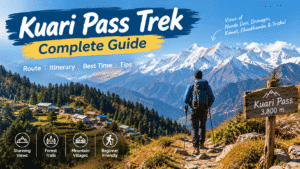
Known as Lord Curzon's Trail, the Kuari Pass trek is in the Chamoli region of Uttarakhand. It rises to an altitude of 3,815 metres (12,516 ft) and is considered a moderate trek.
What distinguishes Kuari pass?
While the pass itself is an attraction, the views open up to a broad Himalayan panorama.
With the weather permitting and the route viable, hikers are treated to views of Nanda Devi, Dronagiri, Kamet and numerous other summits from the pass. On the Uttarakhand tourism website the trail is described as a trekking route passing through alpine meadows, forests, villages and glaciers.
The trail, which was frequented by the British during the Raj, takes its name from Lord Curzon, who is thought to have crossed the Garhwal Himalayas.
A typical trek is around 20 km long and passes through Karchi, Akhrotghetta, Khullara, Tali and the Kuari Pass stretch before joining the trail leading to Auli. Uttarakhand Tourism rates the trail as moderate.
Good for Beginners
However, experts say that hikers should have a reasonable level of fitness and appropriate winter gear.
The trail can be slippery, temperatures can plummet, and altitude can become a challenge. What seems like an easy trek can quickly become more difficult when snow blocks the route.
Experts say that hikers with a couple of easy Himalayan treks under their belt should have no issues with Kuari pass.
Ideal for: Trekkers looking to take in Himalayan views while tackling a moderate winter trek.
Dayara Bugyal – Snow-Covered Alpine Meadows
Imagine walking across a huge open meadow with snow under your boots, forests behind you and Himalayan peaks rising across the horizon.
That is the appeal of Dayara Bugyal.
This huge alpine meadow in Uttarkashi district is one of the best-known in Uttarakhand. Its normally green landscape can transform into a vast snow-covered expanse during winter.
Why choose Dayara Bugyal?
The terrain is one of its biggest assets, offering a trekking route that can be a less steep alternative to many Himalayan climbs.
Winter treks typically start from either Raithal or Barsu. The Uttarakhand Tourism winter circuit includes routes leading to Gui, Chilapada and Dayara Top, where the meadows are blanketed in snow during winter.
From Dayara, trekkers have views of peaks such as Bandarpoonch and Kala Nag, while the trail winds through forests of oak and rhododendron.
The journey to the base village is an adventure in itself, with the road to Raithal passing through the Uttarkashi region and traversing the landscapes of the Bhagirathi region.
Dayara Bugyal for beginners
While it is often seen as an accessible Himalayan trek, winter conditions can make it a much tougher undertaking.
According to the official tourism board, the wider Dayara trek is easy to moderate in difficulty and offers both homestays and camping.
That can make it ideal for first-time trekkers who are more interested in wide snowy expanses than a striking summit.
Best for: Beginners, photographers, families and anyone who wants to experience vast Himalayan snow meadows.
Brahmatal – Frozen Lakes and Snowy Forests
Brahmatal is one of the sought-after Himalayan trekking trails for many winter trekkers.
From the forest, the route opens up to views of snow peaks, high-altitude lakes and spectacular mountain ranges.
It is located in the Chamoli district and rises to an altitude of 3,734 m (12,250 ft) above sea level.
But what should you expect in this trail?
It starts through forests of oak and rhododendron before reaching sub-alpine and alpine zones.
One of the most exciting aspects of this trail is the opportunity to see high-altitude lakes, including Brahmatal and Bekaltal, which can freeze during winter.
This makes the trek an appealing option for winter trekkers who want to experience Uttarakhand's scenic beauty during the cold season.
According to Uttarakhand Tourism, Brahmatal reaches 3,734 m and covers a 21 km trek, while providing views of the snow-capped peaks of Mt. Trishul, Nanda Ghunti and Mt. Neelkanth.
The mix of forests and open ridges gives trekkers a varied experience rather than having them walk through a snowy landscape for several days, as the terrain changes with altitude.
Why Brahmatal is popular in winter
Brahmatal is known as a winter trekking destination because the trail can retain snow through the colder part of the season.
It also offers a different experience from Kedarkantha. Instead of making the summit the sole highlight, Brahmatal combines frozen lakes, forests, snowfields and Himalayan panoramas into one route.
For photography enthusiasts, the combination of shadowy woodlands, white snow and mountain peaks can offer plenty of opportunities.
Top choice: This is a good option for hikers and trekking enthusiasts looking for icy lakes, snowy forests and classic Himalayan views.
Nag Tibba – The Perfect Short Winter Trek
Not every hiker has five or six days to spare for a Himalayan tour.
That is where Nag Tibba comes in.
This trek in Tehri Garhwal region is one of the easiest short treks to a Himalayan range in Uttarakhand. The peak of this mountain stands tall at around 3,022 metres and is an easy-to-moderate trek according to the official tourism circuit of Uttarakhand which can be covered in two days.
The popular route begins from Panthwari/Pantwari village and leads through thick forests towards the camping area and summit.
The trail also passes the local temple of Nag Devta. According to Uttarakhand Tourism, the trail is well marked at some points, although it can also be rocky.
The view from the top is spectacular. On a clear day, you can see the snow-capped peaks of Swargarohini, Bandarpoonch, Srikanth and the Gangotri group of mountains.
The main allure of this trek is its short duration.
You don’t have to take a week off from your job or studies. If you get a weekend off, you can have a proper Himalayan trekking experience. Plus, the winters bring snowfall which gives the trail a different look altogether.
Who should do Nag Tibba?
Nag Tibba is the perfect trek for an inexperienced trekker who wants to get a taste of what Himalayan trekking is like. It will help them assess their own strengths and weaknesses in terms of cold, altitude, and long walks before attempting anything more serious. However, don’t be fooled into thinking that this trek is easy just because it’s short. You can still find yourself struggling with the snow, ice, and cold.
Best for: Inexperienced trekkers, Weekend Warriors, and Time-constrained travellers
Which Winter Trek Should You Choose?
Instead of looking for a single trek that suits everyone, consider the kind of experience you are looking for.
For a first snow trek: Kedarkantha
This trek combines forests, snow, camping and a summit climb without being an extreme mountaineering adventure. It is also one of Uttarakhand’s most established winter trekking routes.
For huge Himalayan views: Kuari Pass
If mountain panoramas are your priority, the Kuari Pass trek is an option worth considering. The route climbs to around 3,815 m and offers extensive views across the Garhwal Himalayas.
For beautiful snowy landscapes
Dayara BugyalDayara is all about the vastness of the landscape. Its open meadows are particularly spectacular when covered in snow.
For frozen lakes
BrahmatalIf your ideal winter trekking is about snow-covered forests, high altitude lakes and mountain views, choose Brahmatal.
For a quick Himalayan escape
Nag TibbaIf you only have a weekend, Nag Tibba provides a relatively short route to a Himalayan summit experience. Uttarakhand Tourism lists it as a two-day trek.
Essential Tips for Winter Trekking in Uttarakhand
Winter trekking is not a same thing as summer trekking. The snow, ice and sub-zero temperatures create their own challenges.
Below are some guidelines for preparing for a winter trekking expedition.
1. Pack with the Right Layers
Packing the right layers is important for staying warm and dry. A proper base layer, insulation layer and waterproof/windproof outer layer are more useful than relying on a single warm jacket.
2. Don’t Ignore Your Feet
Waterproof trekking shoes with good grip are essential. Depending on the amount of snow in the region, the trek operator may suggest or provide microspikes, gaiters and other necessary gear.
3. Don’t Forget to Warm Up Your Extremities
Remember to pack warm gloves, woollen socks, a cap and a face mask to protect your face from cold winds. Your hands and feet can quickly become very cold and numb in such weather.
4. Get Into Shape
You don't need to be an athlete but must be moderately fit to be able to walk for 5-6 hours a day. To get into shape you can start with daily walks and climb a couple of flights of stairs every day. Some leg and core exercises in the weeks preceding the trek will also help.
5. Take Altitude Seriously
Each of the five routes have an altitude of over 3000 meters. Altitude sickness can occur at this height. The symptoms range from headaches, nausea, extreme tiredness, and difficulty in breathing. This shouldn't be taken lightly as one might require medication and emergency evacuation if the situation worsens.
6. Read the Weather Forecast
Winter weather can change suddenly, and snowfall may cause roadblocks and changes to the itinerary. Trekking through freshly fallen snow can also be challenging.
Before setting out, always ask the trek operator, guides and local authorities about current weather and other conditions in the region.
Best Time for Winter Treks in Uttarakhand 2026–2027
The best time for trekking depends largely on your preferences.
- December: Early winter. There is a risk of snowing depending on the altitude and location — so, snowfall may be uneven.
- January: a good month for cold-season trekking. It is usually colder, and there is more chance of snow at higher altitudes.
- February: Good for those who want to experience substantial snow, although conditions can sometimes be demanding.
- March: The snow season is coming to an end, but snow may still remain at higher altitudes while lower areas begin preparing for summer.
It is better to check current snowfall and weather forecasts for the 2026–2027 season rather than assuming particular months will always have the same snowfall levels.
Base Villages and Travel Planning
The durations above are indicative. Check whether your itinerary counts road transfers as part of the trek: a five-day package does not necessarily mean five days of walking. Distances and highest points also vary with the route, campsite and optional summit chosen.
| Trek | Usual Base or Access Area | Planning Point |
|---|---|---|
| Kedarkantha | Sankri | Confirm transfers, the summit-day schedule and your return connection. |
| Kuari Pass | Joshimath/Jyotirmath region; Dhak or Karchi depending on the itinerary | Confirm the actual winter route. An exit through Auli depends on snow and local access. |
| Dayara Bugyal | Raithal or Barsu | Confirm the starting village and whether the itinerary includes Dayara Top or only the meadows. |
| Brahmatal | Lohajung | Check the campsite sequence and the highest viewpoint included in your itinerary. |
| Nag Tibba | Pantwari/Panthwari | Confirm whether two days start at the village or include pickup and return transfers. |
For a broader trip plan, read our Uttarakhand travel guide. If you are considering extra time around Joshimath, our Auli in winter guide can help you compare a trek with a snow holiday.
Important Winter Route Clarifications
Snow is never guaranteed: snow cover and frozen lakes depend on recent weather, altitude and exposure. A winter date alone does not guarantee either experience, especially on a lower route such as Nag Tibba.
Kuari Pass has several route variants: the wider Curzon Trail and shorter winter itineraries are not identical. Do not assume a winter departure includes glacier travel or every location mentioned in a general route description.
Families need an individual assessment: a beginner-friendly label does not automatically make a trek suitable for every child or older traveller. Discuss daily walking, sleeping altitude, cold exposure and previous outdoor experience before booking.
Lake ice is not a walking surface: enjoy views of Bekaltal, Brahmatal or Juda Ka Talab from a safe position on the shore and follow your guide’s instructions.
Permits, Documents and Booking Checks
Confirm current forest-entry permissions, campsite restrictions and local requirements with your operator for the specific route and departure date. Carry valid government photo identification and ask which permits and entry fees are included.
- Request a written day-wise itinerary with walking days, road-transfer days, sleeping altitudes and pickup details.
- Check accommodation, meals, guide arrangements, sleeping bags, tents and the availability of snow equipment.
- Clarify transport, equipment rental, personal porter charges, taxes and other exclusions.
- Ask about weather-related route changes, cancellation terms and arrangements if the summit or pass is inaccessible.
- Check the evacuation procedure and whether your travel insurance covers trekking at the route’s maximum altitude and any rescue expenses.
Additional Winter Packing Checklist
Along with the clothing already listed above, carry a head torch with spare batteries, sunglasses, sunscreen, lip balm, a water bottle, personal medicines, a small first-aid kit, trekking poles and waterproof protection for your backpack. Keep an extra pair of dry socks and dry sleeping layers packed separately.
Ask the operator for the sleeping bag’s temperature rating and the insulation provided beneath it. Mobile connectivity and charging can be unreliable beyond the base village, so download essential information and carry a power bank.
Altitude Awareness and Weather Updates
Tell your guide promptly if you develop symptoms after ascending. Do not continue climbing with symptoms of altitude illness. If symptoms worsen, descent and medical assessment are needed; breathing difficulty at rest, confusion or difficulty walking require urgent action. See the CDC travel-health reference for the principles of avoiding further ascent with altitude symptoms.
Use IMD Meteorological Centre Dehradun for official district forecasts and weather warnings. City temperatures do not represent conditions at a high campsite: ask your guide about the route and sleeping locations before departure.
Responsible Trekking in Uttarakhand
Carry all litter back, including tissues and food packaging. Stay on the designated route, avoid disturbing wildlife and follow local rules for camping, waste disposal and fires. Respect village customs and use authorised campsites chosen by your guide.
Frequently Asked Questions About Winter Treks in Uttarakhand
Which winter trek is best for a first-time trekker?
Nag Tibba suits travellers seeking a shorter introduction, while Dayara Bugyal suits those looking for snow meadows. Kedarkantha is an option for a first snow summit. Choose according to fitness, available days and actual winter conditions rather than the beginner label alone.
Can I complete these treks without a guide in winter?
A qualified local guide is advisable because snow can obscure the trail and change the difficulty. Check current access rules and book an itinerary with clear navigation and emergency arrangements.
Are trekking days and package days the same?
No. Packages may include road journeys and nights in a base village. Check the day-wise itinerary to see how many days involve walking.
Are snow, summit access and frozen lakes guaranteed?
No. These depend on weather and route conditions. The guide may change the route or turn the group back when conditions require it.
How much does a winter trek cost?
The price depends on the route, dates, group size, transfers, accommodation and equipment included. Compare written inclusions and exclusions and request a quote for your exact departure.
Official Resources and Related Trek Packages
Explore Uttarakhand Tourism’s official trekking directory and its Kuari Pass information for destination context. Use current local guidance to confirm winter access.
Compare our Kedarkantha trek package, Kuari Pass trek package and Brahmatal trek package, or browse more Uttarakhand travel blogs.
Plan Your Winter Trek with Chaukhamba Travels
Ready to explore Uttarakhand’s snowy trails? Share your preferred trek, travel dates, number of travellers and pickup city with Chaukhamba Travels. Get help choosing a suitable itinerary and request a quote with clear inclusions and exclusions.
Enquire on WhatsApp Call +91 92598 27824 Contact Chaukhamba Travels