Introduction
Planning a Gangotri Dham Yatra is not quite the same as planning an ordinary hill trip. The temple is connected by road, but the journey involves long mountain drives, changing weather, limited accommodation during peak season and high-altitude conditions.
Gangotri Dham is one of the four Char Dham pilgrimage sites in Uttarakhand and is located in Uttarkashi district at an altitude of around 3,100 metres. The temple is dedicated to Goddess Ganga and stands beside the Bhagirathi River, surrounded by the mountains of the Garhwal Himalayas.
For pilgrims travelling to Gangotri in 2026, it is useful to know the temple opening dates, registration process, route, travel time, accommodation options, approximate cost and the best months to visit. If you’re covering all four shrines this season, our Char Dham Yatra Packages 2026 guide walks through the full itinerary, and our Kedarnath Yatra Guide and Badrinath Dham travel guide cover the other two dhams in detail.
This guide explains the practical details you should know before starting your Gangotri Yatra 2026.
Quick Facts About Gangotri Dham
| Information | Details |
|---|---|
| Location | Uttarkashi district, Uttarakhand |
| Altitude | Approximately 3,100 metres |
| Temple dedicated to | Goddess Ganga |
| Part of | Uttarakhand Char Dham Yatra |
| Nearest major town | Uttarkashi |
| Nearest railway stations | Rishikesh / Haridwar |
| Nearest airport | Jolly Grant Airport, Dehradun |
| Road access | Gangotri is connected by road |
| Famous nearby destination | Gaumukh |
| Best time to visit | May–June and September–October, subject to weather and road conditions |
Where Is Gangotri Dham Located?
Gangotri Dham is situated in Uttarkashi district of Uttarakhand, in the upper reaches of the Garhwal Himalayas. The temple stands beside the Bhagirathi River and is surrounded by steep mountain slopes, forests and high Himalayan peaks.
Gangotri is connected by road with Uttarkashi, Rishikesh, Haridwar and Dehradun. Uttarkashi is the main town used by travellers before continuing towards Harsil and Gangotri.
Unlike Kedarnath, pilgrims do not have to undertake a long trek to reach the Gangotri Temple. The temple can be reached by road, although the journey through the mountains can take several hours.
Why Is Gangotri Important?
Gangotri is closely associated with the descent of the River Ganga to earth. According to Hindu tradition, King Bhagirath performed severe penance to bring the celestial river to earth so that the souls of his ancestors could attain liberation.
It is believed that the force of Ganga’s descent was too great for the earth to withstand. Lord Shiva therefore received the river in his matted hair and released it through several streams.
The Bhagirathi River flowing through Gangotri is traditionally associated with this story. The place is therefore important not only as a temple town but also as one of the major pilgrimage centres connected with the origin and worship of the Ganga.
Near the temple, pilgrims can also visit Bhagirath Shila, which is traditionally believed to be associated with King Bhagirath’s meditation.
Gangotri Temple: What to Know Before Visiting
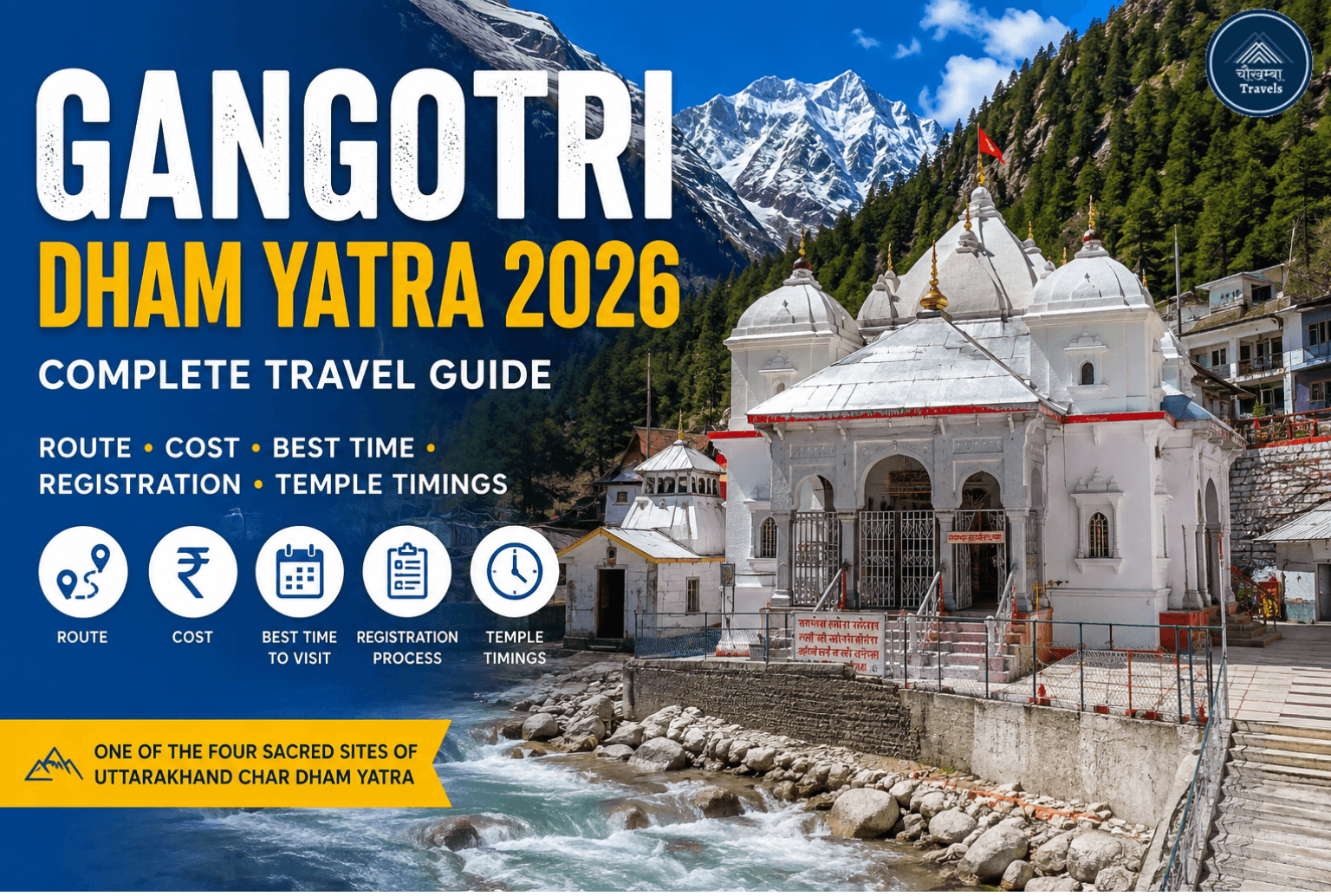
The present Gangotri Temple is a relatively simple white structure set against the Himalayan landscape beside the Bhagirathi River. The temple and its surroundings have a very different atmosphere from a typical tourist destination, particularly during the early morning and evening aarti.
A few things are useful to know before your visit:
- The deity stays at Gangotri only during the pilgrimage season. During winter, when heavy snowfall makes the region difficult to access, the idol is ceremonially taken to Mukhba village near Harsil.
- Winter worship continues at Mukhba. Devotees who visit the Harsil area during the winter season can visit the village temple where the deity is worshipped.
- Bhagirath Shila is located near the main temple and is an important religious spot for pilgrims.
- The Bhagirathi River flows beside the temple. Pilgrims traditionally take a holy dip, but the water remains extremely cold because of its Himalayan and glacial origin. Extra care is required near the river.
- Aarti timings can change. If attending aarti is important to you, check the latest timings locally or with the temple authorities before planning your visit.
Gangotri Temple Opening & Closing Dates 2026
Gangotri Temple remains open only for part of the year because winter snowfall makes the upper Himalayan region difficult to access.
Gangotri Temple Opening Date 2026
The Gangotri Temple opened for the 2026 pilgrimage season on 19 April 2026, on the auspicious occasion of Akshaya Tritiya.
Gangotri Temple Closing Date 2026
The temple normally closes around the Diwali/Bhai Dooj period when the pilgrimage season comes to an end. The exact closing ceremony and date should be checked against the latest official announcement before travelling.
After the seasonal closure, the deity is moved to Mukhba village, where winter worship continues.
Important: Temple dates, timings and local arrangements can change according to religious calendars, weather and administrative decisions. Always verify the latest information on the official Uttarakhand Tourist Care portal before starting your journey.
How to Reach Gangotri Dham
Gangotri does not have its own railway station or commercial airport. Most pilgrims first reach Dehradun, Rishikesh or Haridwar and then continue by road.
By Air
The nearest airport is Jolly Grant Airport in Dehradun. From the airport, you need to continue by road towards Uttarkashi, Harsil and Gangotri.
The journey involves mountain roads and can take most of the day, so travellers arriving by flight should plan their overnight stay carefully rather than trying to reach Gangotri immediately after a late flight.
By Train
The nearest major railway stations are Rishikesh and Haridwar.
Rishikesh is generally used as a starting point for Uttarakhand pilgrimage journeys, while Haridwar has extensive railway connectivity with Delhi and other parts of India.
From either railway station, the remaining journey to Gangotri has to be completed by road.
By Road
Road travel is the most practical way to reach Gangotri.
A commonly used route from Rishikesh is:
Rishikesh → Narendra Nagar → Chamba → Tehri → Dharasu Bend → Uttarkashi → Bhatwari → Gangnani → Harsil → Gangotri
Another option from Dehradun is:
Dehradun → Mussoorie → Chamba → Tehri → Dharasu Bend → Uttarkashi → Bhatwari → Gangnani → Harsil → Gangotri
The exact route and travel time can change because of road conditions, traffic, weather and temporary restrictions.
Gangotri Distance & Travel Time
Approximate road distances are given below:
| Starting Point | Approx. Distance to Gangotri | Approx. Travel Time* |
|---|---|---|
| Rishikesh | 250–270 km | 8–10 hours |
| Haridwar | 280–300 km | 9–11 hours |
| Dehradun | 240–260 km | 8–10 hours |
| Uttarkashi | Around 100 km | 3–4 hours |
| Delhi | Around 450–475 km | 12–15 hours |
*Travel time is approximate and can vary considerably due to traffic, road repairs, weather, landslides and other mountain-road conditions.
For travellers coming from Delhi, it is usually more comfortable to break the journey instead of trying to drive directly to Gangotri in one stretch.
Do You Need to Trek to Gangotri?
No. A trek is not required to reach Gangotri Temple.
The temple is connected by a motorable road, and pilgrims can reach the temple area by vehicle.
The trek becomes necessary if you want to continue beyond Gangotri towards Gaumukh, the source area of the Bhagirathi. If you enjoy Himalayan trekking beyond the pilgrimage circuit, you may also want to look at nearby routes such as the Har Ki Dun Trek or the Valley of Flowers Trek, both in the same Garhwal Himalayan belt.
Gangotri Yatra Registration 2026
Pilgrims travelling to Uttarakhand’s Char Dham destinations are required to complete the applicable pilgrimage registration process.
Before travelling, check the latest requirements through the official Uttarakhand Tourist Care system because registration rules, verification procedures and travel arrangements can change from one season to another. For a step-by-step walkthrough of the process, see our detailed Char Dham Yatra Registration 2026 guide.
The general process involves:
- Visit the official Uttarakhand Tourist Care registration portal.
- Create an account using your mobile number.
- Complete the required verification.
- Enter your travel dates and pilgrimage destinations.
- Add details of the people travelling with you.
- Provide the required identification documents.
- Complete the registration and save the confirmation/QR code if issued.
Keep a digital and printed copy of your registration details and identification documents during the journey.
Tip: Do not wait until the last day to complete registration. During the busy Char Dham season, it is better to complete the required formalities before leaving home.
Best Time to Visit Gangotri
The best time for a Gangotri pilgrimage depends on what you want from the trip. May and June are popular for temple visits, while September and October can offer clearer post-monsoon conditions and fewer crowds.
May to June
This is one of the busiest periods of the Gangotri season.
- Temple season has recently begun.
- Daytime conditions are generally comfortable compared with winter.
- Nights can still be cold.
- Pilgrimage traffic can be heavy.
- Accommodation may fill quickly during holidays.
July to August
The monsoon season requires extra caution.
Heavy rainfall can lead to:
- Landslides
- Road blockages
- Delays
- Poor visibility
- Changes in local travel plans
If you are travelling during monsoon, keep your itinerary flexible and check the road situation before starting each day’s journey.
September to October
For many travellers, this is a comfortable period for a Gangotri trip.
After the monsoon, mountain views can become clearer and the number of pilgrims may reduce compared with the peak summer months.
However, weather can change quickly at high altitude, so warm clothing should still be carried.
November Onwards
Gangotri Temple closes for the winter season around the Diwali/Bhai Dooj period. Snow and winter conditions make the upper region unsuitable for the normal pilgrimage season.
The deity is moved to Mukhba village, where winter worship continues.
Gangotri Weather
Gangotri has a high-altitude Himalayan climate, and temperatures can change quickly.
| Season | General Conditions |
|---|---|
| May–June | Pleasant days, cold mornings and nights |
| July–August | Rainy, with possible road disruptions |
| September | Generally clearer after monsoon |
| October | Cold mornings and evenings; winter approaches |
| November–April | Winter conditions and seasonal temple closure |
Do not rely only on a city-level weather forecast. Before leaving for Gangotri, check the latest weather and road conditions for the mountain route.
Gaumukh Trek: Beyond Gangotri
Gangotri is also the starting point for the trek towards Gaumukh, the snout of the Gangotri Glacier and one of the most significant trekking destinations in the region.
The trek is very different from the pilgrimage to Gangotri Temple. It requires more preparation because of the altitude, terrain, weather and limited facilities along the trail.
Gaumukh Trek Quick Facts
- Starting point: Gangotri
- Destination: Gaumukh
- Difficulty: Moderate
- Typical duration: Usually planned over multiple days depending on the itinerary
- Major halt: Bhojwasa
- Further extension: Tapovan
- Permit: Required as per current Forest Department regulations
- Best season: May–June and September–early October, subject to current conditions
The trail passes through areas such as Chirbasa and Bhojwasa before reaching Gaumukh. Travellers continuing towards Tapovan should be prepared for a more demanding section.
Do not treat the Gaumukh trek as an extension of an ordinary temple visit. Check current permit rules, route conditions and trekking restrictions before starting.
Where to Stay During Gangotri Yatra
Accommodation around Gangotri is generally simple. During the pilgrimage season, you can find government accommodation, dharamshalas, ashrams, guesthouses and private hotels.
Gangotri
Staying in Gangotri is convenient if your priority is early morning darshan or evening aarti.
Harsil
Harsil is a good option for travellers who want a quieter stay in a scenic Himalayan setting. It can also be useful when accommodation in Gangotri is unavailable.
Uttarkashi
Uttarkashi has a wider range of hotels and is a practical overnight stop on the way to or from Gangotri.
Accommodation Tip
May and June are busy months. If you are travelling during peak Char Dham season, book your accommodation in advance whenever possible.
Suggested Gangotri Yatra Itinerary
3-Day Gangotri Trip from Rishikesh/Haridwar
Day 1: Rishikesh/Haridwar → Uttarkashi Overnight stay in Uttarkashi.
Day 2: Uttarkashi → Gangotri Travel to Gangotri, visit the temple and spend the night according to your travel plan.
Day 3: Gangotri → Rishikesh/Haridwar Start the return journey.
This is a compact itinerary and can feel tiring because of the long mountain drives.
4-Day More Comfortable Plan
Day 1: Rishikesh/Haridwar → Uttarkashi Overnight stay.
Day 2: Uttarkashi → Harsil/Gangotri Visit Gangotri Temple and explore the surrounding area.
Day 3: Gangotri/Harsil → Uttarkashi Keep the day flexible for local sightseeing and rest.
Day 4: Uttarkashi → Rishikesh/Haridwar
This option gives you more breathing room and is better suited to families or travellers who do not want to rush.
5-Day Plan with Gaumukh
A Gaumukh itinerary requires additional time and preparation.
A typical plan can include:
- Rishikesh → Uttarkashi
- Uttarkashi → Gangotri
- Gangotri → Bhojwasa
- Gaumukh/Tapovan excursion
- Return towards Rishikesh
The exact trekking schedule should be planned according to current permits, weather and trail conditions.
What to Pack for Gangotri Yatra
Gangotri can be cold even during the main pilgrimage season, so packing appropriately is important.
- Warm layers
- Thermal wear for colder months
- Windproof or waterproof jacket
- Comfortable walking shoes
- Trekking shoes if going towards Gaumukh
- Sunglasses and sunscreen
- Personal medicines
- Prescription medicines, if applicable
- Reusable water bottle
- Power bank
- Basic toiletries
- Valid ID and registration documents
- Some cash, as digital payment facilities may not work everywhere
- Small backpack for day visits
Avoid carrying unnecessary luggage if you are travelling through several mountain destinations.
Gangotri Yatra Cost 2026
The total cost depends on your starting point, number of travellers, transport type, accommodation and whether you include Gaumukh.
For a basic trip from Rishikesh/Haridwar, an approximate local budget can be planned as follows:
| Travel Style | Approx. Per-Person Budget* |
|---|---|
| Budget/shared transport | ₹3,000–₹5,000 |
| Mid-range | ₹6,000–₹9,000 |
| More comfortable/private travel | ₹12,000+ |
*These are broad planning estimates and can vary by season, vehicle type, hotel category, number of travellers and itinerary. Long-distance travel to Uttarakhand, special permits, trekking expenses and personal shopping may cost extra.
During May and June, demand for vehicles and rooms can increase, so actual prices may be higher. For a fixed, all-inclusive plan covering Gangotri along with the other dhams, browse our Char Dham Yatra Packages 2026 or Do Dham Yatra Package if you’re covering only two shrines.
Important Tips for Gangotri Yatra
1. Start mountain journeys early
Mountain travel takes longer than the same distance on plains. Starting early gives you more daylight and flexibility in case of delays.
2. Keep extra time in your itinerary
Do not plan your return flight or train immediately after reaching the plains. Mountain roads can be affected by weather, traffic and temporary closures.
3. Check road conditions
Before travelling from Uttarkashi towards Gangotri, check the latest road and weather updates on the Uttarakhand Tourist Care portal.
4. Carry warm clothing
Even when the weather feels pleasant during the day, temperatures can fall quickly after sunset.
5. Take care near the river
The Bhagirathi is cold and fast-flowing. Avoid going close to unsafe edges or attempting a dip where local authorities advise against it.
6. Respect the local environment
Gangotri is an ecologically sensitive Himalayan region. Avoid single-use plastic, do not litter and carry waste back with you where disposal facilities are limited.
7. Plan accommodation in advance
Peak pilgrimage dates can fill hotels and guesthouses quickly.
8. Keep your documents accessible
Carry your registration details, identification and booking confirmations in both digital and physical form.
Frequently Asked Questions
Is Gangotri difficult to reach?
The Gangotri Temple itself is accessible by road, so there is no long trek involved. However, the road journey from Rishikesh, Haridwar or Dehradun is long and passes through mountainous terrain.
Do I need to trek to Gangotri Temple?
No. Vehicles can reach the temple area. Trekking is required if you continue from Gangotri towards destinations such as Gaumukh and Tapovan.
Is Gangotri and Gaumukh the same place?
No. Gangotri is the temple town and pilgrimage destination. Gaumukh is the snout of the Gangotri Glacier and is reached by trekking from Gangotri.
What is the best month to visit Gangotri?
May, June, September and early October are generally popular months. Your final choice should depend on weather, road conditions, crowd levels and the current pilgrimage season.
Where does the Gangotri deity stay during winter?
After the Gangotri Temple closes for winter, the deity is ceremonially moved to Mukhba village near Harsil, where worship continues during the winter months.
Can senior citizens visit Gangotri?
Gangotri Temple is road accessible, but the altitude and long mountain journey can be tiring. Senior citizens should plan sufficient rest stops and consider their individual fitness and travel needs before the journey.
Is registration required for Gangotri Yatra?
Pilgrims should complete the applicable Uttarakhand Char Dham registration on the official government portal before travelling. Check the latest official requirements because procedures can change between pilgrimage seasons — see our Char Dham Yatra Registration 2026 guide for the full process.
Can I visit Gangotri during the monsoon?
Yes, but monsoon travel requires caution. Landslides, rainfall and temporary road closures can affect the journey, so keep your schedule flexible and check current conditions before travelling.
Plan Your Gangotri Dham Yatra with Chaukhamba Travels
Gangotri is more than a stop on the Char Dham route. The long mountain drive, the Bhagirathi River, the temple, Mukhba and the surrounding Himalayan landscape make the journey a memorable part of the pilgrimage itself.
If you are planning Gangotri along with Kedarnath, Badrinath or Yamunotri, a well-planned itinerary can save travel time and make the journey more comfortable. You may also enjoy reading about our other Himalayan journeys on the Chaukhamba Travels blog, or browse our full range of Uttarakhand Tour Packages for treks and getaways beyond the Char Dham circuit.
Chaukhamba Travels can help you plan Uttarakhand journeys with transport, accommodation and customised itineraries from Dehradun and Rishikesh.
Explore Char Dham Yatra Packages 2026 or contact Chaukhamba Travels to start planning your Gangotri Dham Yatra.