If you are a die-hard trekker who loves the majestic trails of the Himalayas, chances are high that you’ve heard of—or dreamed about—a magical trail known as Kuari Pass.
Winding through ancient forests, secluded mountain hamlets, and sweeping alpine meadows, this legendary trail showcases the breathtaking majesty of the Garhwal Himalayas at every turn.
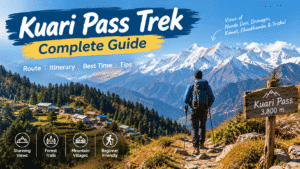
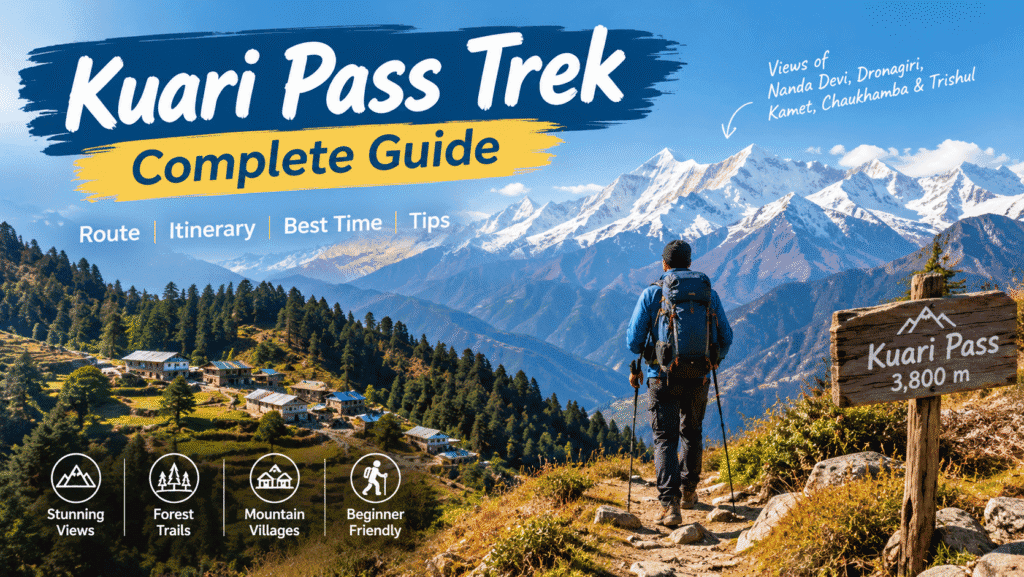
Situated at an altitude of 3,800 metres (12,500 ft) in Uttarakhand's Chamoli district, Kuari Pass delivers uninterrupted, front-row views of India's most celebrated peaks: Nanda Devi, Dronagiri, Kamet, Chaukhamba, and Trishul.
The best part? The Kuari Pass trek is an ideal gateway for beginners looking for their very first Himalayan adventure.
You don't need technical mountaineering experience to conquer this trail. With the right gear and basic physical preparation, Kuari Pass stands out as one of the finest introductory treks anywhere in the Himalayas.
Where is Kuari Pass?
Located in the Garhwal region of Uttarakhand, India, the trek officially begins from Joshimath in the Chamoli district.
This route is historically revered as the Lord Curzon Trail, named after the former Viceroy of India who trekked through these mountains in 1905 and became captivated by their raw beauty.
Depending on the season and chosen itinerary, the trek offers a mix of gentle walks and moderate climbs. A complete round-trip covers a total walking distance of roughly 35 to 40 km.
What is the Kuari Pass Trek Route Like?
While trekking companies may adapt route variations, the classic, most rewarding trail proceeds as follows:
Campsites and daily distances vary based on weather, season, and route preferences.
Joshimath to Dhak
Joshimath serves as the major base town where most Himalayan expeditions converge. After assembling gear and briefing, a short drive brings you to Dhak village, where the foot trail begins. This opening stretch allows you to establish a steady walking rhythm.
If you are new to multi-day trekking, this first section will quickly show you how trekking with a backpack differs from walking in the city.
Dhak to Gulling
From Dhak, the trail gradually climbs through oak and rhododendron forests. The incline is manageable, making it the perfect stretch to settle into a comfortable, sustainable pace. There is no need to hurry—learning to pace yourself early on is key to an enjoyable trek.
Gulling to Khullara
Leaving Gulling, the trail ascends into open high-altitude landscapes as the tree line thins out. In winter and early spring, snow transforms this path into a serene white landscape. Khullara typically serves as the primary base camp before making the final push to the pass.
Khullara to Kuari Pass
This is the highlight day. Crossing open ridges at 3,800 metres, you are treated to a 360-degree panorama of towering Himalayan giants.
While the pass involves no technical climbing, high altitude and sudden snow can present a fun challenge. At the summit, there are no artificial monuments—just vast ridges, deep valleys, and raw nature speaking for itself.
Kuari Pass to Tali and Auli
From the pass, the descent leads down toward Tali and concludes in Auli—famous for its ski slopes and alpine Bugyals (meadows). Always take descents carefully; downhill walking places significant strain on the knees, so keeping a steady, controlled pace is essential.
How Long is the Kuari Pass Trek?
Most itineraries span 5 to 6 days. Opting for a slightly longer itinerary is often beneficial—it provides shorter daily walking legs, ample time for acclimatization, and built-in flexibility in case mountain weather shifts.
Best Time for the Kuari Pass Trek
Each season brings a distinct charm to the Kuari Pass trail:
Spring (March to May)
Lower valleys bloom with lush greenery while residual snow lingers on the high pass. Perfect for trekkers looking to enjoy both snow patches and pleasant day temperatures.
Autumn (September to November)
Post-monsoon skies offer crystal-clear conditions and sharp mountain visibility. October is widely considered the peak month for clear, crisp views of the Garhwal range.
Winter (December to February)
Transforms the trail into a winter wonderland. Nights are freezing and require high-grade cold-weather gear, making it a thrilling option for winter snow-trekking enthusiasts.
Monsoon (June to August)
Monsoon brings heavy rainfall, slippery trails, and potential road blockages across Uttarakhand. It is generally recommended to avoid trekking this route during peak monsoon.
How Difficult is the Kuari Pass Trek?
Graded as Moderate, Kuari Pass is manageable for anyone with basic physical fitness. The challenge lies not in technical climbing, but in continuous daily walking, altitude adaptation, and uneven terrain.
Altitude Awareness
At 3,800 metres, the air is noticeably thinner. Always listen to your body and inform your trek leader immediately if you experience persistent headaches, dizziness, or unusual fatigue.
How to Prepare?
- Cardio & Endurance: Start walking regularly 3-4 weeks prior. Incline walking, stair climbing, cycling, and jogging build great stamina.
- Leg Strength: Focus on squats, lunges, and step-ups at the gym.
- Backpack & Footwear: Train with a loaded backpack during practice walks and break in your trekking shoes well before day one to avoid blisters.
Packing List for Kuari Pass Trek
Clothing (Layering Strategy)
- Thermal base layers (top & bottom)
- Quick-dry t-shirts
- Fleece jacket / warm mid-layer
- Insulated down jacket
- Waterproof / windproof outer jacket
- Sturdy trekking trousers
- Woollen socks, warm gloves, beanie, and neck warmer
Essential Gear & Accessories
- Trekking Shoes: High-ankle, waterproof shoes with good grip.
- Daypack: 20–30L pack for water, rain gear, snacks, and personal items.
- Sun Protection: UV sunglasses, sunscreen (SPF 50+), and lip balm.
- Hydration & Supplies: Reusable 1L bottle or hydration bladder, high-energy snacks (nuts, dates, energy bars).
- Personal Medical Kit: Bandages, ORS sachets, pain relief, blister pads, and personal prescription medicines.
- Electronics & Docs: Power bank, headlamp, government ID card, and cash (ATMs are rare on the trail).
What Makes Kuari Pass Special?
Kuari Pass delivers the quintessential Himalayan experience: ancient forests, tranquil meadows, snowy winter ridges, and panoramic views of India's iconic peaks—all without demanding technical climbing skills.
Book Your Kuari Pass Experience
Join Chaukhamba Travels for an unforgettable journey. Packages start at ₹9,999 per person (includes Accommodation, Meals, Professional Guides, and Trek Permits).
Detailed Itinerary
Day 1: Rishikesh to Joshimath
- Scenic drive passing Devprayag, Srinagar, Rudraprayag, and Karnaprayag along the Alaknanda River.
- Check-in at Joshimath guesthouse (1,890m), team briefing, and gear check.
Drive Distance: 260 km (approx. 8-9 hours)
Day 2: Joshimath to Chitrakhana (via Dhak)
- Drive to Dhak village and start trekking through oak forests and mountain hamlets.
- Set up camp at Chitrakhana (~2,800m) with stunning mountain sunset views.
Trek Distance: ~10-12 km (5-6 hours)
Day 3: Chitrakhana to Tali Top
- Trek through dense woodland opening up to wide Bugyals (alpine meadows).
- Camp at Tali Top (~3,300m)—famous for clear night skies and stargazing.
Trek Distance: ~6 km (4-5 hours)
Day 4: Tali Top to Kuari Pass & Back (via Khullara Top)
- Early morning ascent towards Kuari Pass (3,800m) with views of Nanda Devi and Chaukhamba.
- Photography at the pass, followed by descent back to Tali Top camp for hot lunch.
Trek Distance: ~12-14 km round-trip (8-9 hours)
Day 5: Tali Top to Joshimath (via Auli)
- Descend through Gorson Bugyal towards Auli ski resort.
- Drive from Auli back to Joshimath for a restful evening at the hotel.
Trek & Drive: ~8 km trek + short drive (5-6 hours total)
Day 6: Joshimath to Rishikesh
- Drive back along the river valleys to Rishikesh, concluding the expedition by evening.
Drive Distance: 260 km (approx. 8-9 hours)