The Hampta Pass Trek is one of the most popular Himalayan treks in India, attracting thousands of adventure enthusiasts every year. Nestled in Himachal Pradesh, this stunning trek connects the lush green valleys of Kullu with the stark, dramatic landscapes of Lahaul and Spiti. Along the way, trekkers witness alpine meadows, river crossings, snow patches, glaciers, mountain passes, and breathtaking views that make every step worthwhile.
However, before booking the trek, one question often comes to mind: Is Hampta Pass Trek difficult. This is especially important for first-time trekkers, students, families, and working professionals who may not have prior trekking experience. The good news is that while the trek presents certain challenges, it is widely regarded as one of the best Himalayan treks for beginners when undertaken with proper preparation and experienced trek leaders.
In this guide, we will explore the Hampta Pass Trek difficulty, fitness requirements, terrain conditions, challenges, preparation tips, and whether beginners can successfully complete the trek.
Table of Contents
Understanding the Hampta Pass Trek
Before discussing the difficulty level, it helps to understand what the trek involves.
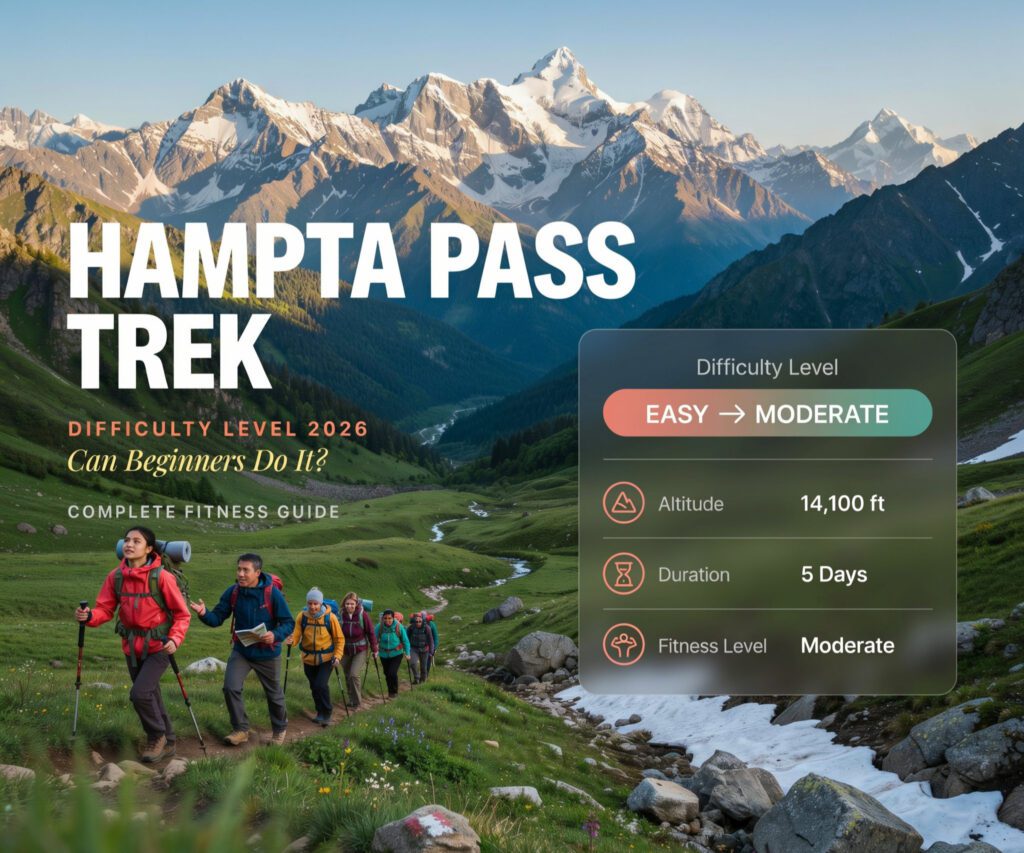
The Hampta Pass Trek usually spans 4 to 6 days and reaches an altitude of approximately 14,100 feet (4,300 meters). The route begins near Manali and gradually climbs through forests, meadows, rocky landscapes, and mountain passes before descending into the rugged terrain of Lahaul.
Unlike many high-altitude Himalayan treks that require extensive mountaineering experience, Hampta Pass offers a balanced mix of adventure and accessibility.
This is one reason why it is often recommended as an introductory Himalayan trekking experience.
Hampta Pass Trek Difficulty: How Challenging Is It?
The overall Hampta Pass Trek difficulty is generally classified as easy to moderate.
This means that while the trek is achievable for most healthy individuals, it still requires reasonable fitness, stamina, and mental determination.
Why It Is Considered Moderate
Several factors contribute to the trek’s moderate rating:
- High-altitude mountain environment
- Daily trekking distances of 5–10 kilometers
- Steep ascents and descents
- Rocky and uneven trails
- Snow crossings during certain months
- Rapid weather changes
Although these factors create challenges, they are manageable for beginners who prepare properly.
Why It Is Beginner-Friendly
At the same time, Hampta Pass remains one of the most accessible Himalayan treks because:
- The itinerary allows gradual altitude gain
- Campsites are well spaced
- Professional trek leaders guide participants
- Technical climbing skills are not required
- Trekking routes are clearly established
For most first-time trekkers, the experience feels challenging but achievable.
Is Hampta Pass Trek Difficult for Beginners?
The simple answer is: No, not if you prepare adequately.
Many first-time trekkers successfully complete Hampta Pass every season.
The key lies in understanding that trekking differs from everyday walking. Even physically active individuals may find mountain trails demanding because of altitude, terrain, and weather conditions.
A Realistic Example
Imagine a college student who regularly participates in sports but has never done a Himalayan trek.
With 4–6 weeks of preparation, regular walking, light jogging, and guided support during the trek, that student can comfortably complete Hampta Pass.
Similarly, many working professionals with desk jobs successfully finish the trek after following a structured fitness plan.
The trek rewards consistency more than athletic excellence.
Understanding Hampta Pass Fitness Requirements
One of the most important factors influencing your trekking experience is physical preparation.
The Hampta Pass fitness requirements are reasonable compared to many other Himalayan expeditions, but fitness should never be ignored.
Cardiovascular Endurance
Your heart and lungs must be capable of handling continuous uphill walking.
Good preparation activities include:
- Brisk walking
- Jogging
- Cycling
- Swimming
- Stair climbing
Ideally, you should be able to jog for 30–40 minutes without excessive fatigue.
Leg Strength
Strong legs help manage ascents, descents, and long trekking hours.
Useful exercises include:
- Squats
- Lunges
- Step-ups
- Stair workouts
- Hill walking
Core Stability
A strong core improves balance and reduces fatigue while carrying a backpack.
Recommended exercises include:
- Planks
- Mountain climbers
- Leg raises
- Basic yoga poses
Flexibility and Mobility
Flexible muscles reduce the risk of injuries and muscle soreness.
Stretching sessions should become part of your weekly routine before the trek.
A Simple 6-Week Preparation Plan
Weeks 1–2
Focus on building consistency.
- Walk 4–5 kilometers daily
- Light jogging for 15–20 minutes
- Basic stretching
Weeks 3–4
Increase intensity.
- Jog 3–4 kilometers
- Practice stair climbing
- Perform strength exercises three times weekly
Weeks 5–6
Simulate trekking conditions.
- Weekend hikes
- Longer walks with a backpack
- Endurance-focused workouts
Following this schedule significantly improves your trekking readiness.
What Makes Hampta Pass Challenging?
Understanding the challenges helps trekkers prepare mentally and physically.
Altitude Gain
The trek reaches over 14,000 feet.
At higher elevations:
- Oxygen levels decrease
- Breathing becomes harder
- Fatigue develops more quickly
Most trekkers adapt well because the ascent is gradual.
River Crossings
Depending on weather and season, trekkers may encounter streams and flowing water crossings.
These sections add excitement but require careful footing and guidance from trek leaders.
Snow Sections
Early-season trekkers often encounter snowfields near the pass.
Walking on snow demands patience and concentration but does not require technical climbing expertise.
Weather Variability
Mountain weather can change rapidly.
A sunny morning may turn into a cloudy afternoon with rain or snowfall.
Experienced trek leaders monitor conditions and make necessary adjustments to ensure safety.
Why Guided Treks Make a Huge Difference
One reason the Hampta Pass Trek for beginners is so popular is the availability of professionally guided expeditions.
Experienced trek leaders help participants overcome many common challenges.
Route Navigation
Trekkers do not need to worry about finding the correct trail.
Guides manage navigation throughout the journey.
Safety Management
Professional teams monitor:
- Weather conditions
- Altitude-related concerns
- Group pace
- Emergency situations
This creates a safer and more comfortable experience for beginners.
Motivation and Confidence
Many first-time trekkers experience moments of self-doubt.
Experienced trek leaders provide encouragement, practical advice, and pacing strategies that help participants reach the summit successfully.
For beginners, this support often becomes the difference between merely completing a trek and truly enjoying it.
Student Development Benefits of Trekking
While trekking is primarily seen as an adventure activity, its educational value is often overlooked.
Building Resilience
Students learn how to overcome physical and mental challenges.
The ability to push through difficult situations develops perseverance and self-confidence.
Leadership Development
Group trekking environments naturally encourage leadership skills.
Participants learn:
- Teamwork
- Responsibility
- Decision-making
- Communication
These qualities benefit students academically and professionally.
Environmental Awareness
The Hampta Pass region offers a living classroom where students can learn about:
- Mountain ecosystems
- Biodiversity
- Climate patterns
- Conservation efforts
Such experiences create deeper environmental understanding than classroom lessons alone.
Personal Growth
Completing a challenging trek often transforms how individuals view themselves.
Many participants return with increased confidence, independence, and self-belief.
Emotional and Social Learning Through Trekking
The mountains teach lessons that extend beyond physical fitness.
Developing Patience
Mountain travel follows nature’s pace rather than modern schedules.
Trekkers learn patience, adaptability, and mindfulness.
Building Friendships
Shared challenges create strong bonds among participants.
Many trekkers form friendships that continue long after the journey ends.
Reducing Stress
Time spent in nature has been linked to improved mental well-being.
The peaceful surroundings of Hampta Pass offer a refreshing break from academic pressure, work stress, and digital distractions.
Essential Tips for First-Time Trekkers
Start Training Early
Do not wait until the final week.
Gradual preparation is far more effective.
Invest in Proper Footwear
Good trekking shoes improve comfort and reduce injury risk.
Stay Hydrated
Drink water regularly throughout the trek.
Pack Light
Carry only essential items.
A lighter backpack makes trekking significantly easier.
Listen to Your Trek Leaders
Guides have extensive mountain experience.
Following their instructions improves safety and enjoyment.
Maintain a Positive Mindset
Mental preparation is just as important as physical fitness.
Focus on steady progress rather than speed.
Who Should Consider the Hampta Pass Trek?
The trek is suitable for:
- College students
- First-time trekkers
- Adventure enthusiasts
- Working professionals
- Nature lovers
- Small groups and families with fit teenagers
Individuals with serious medical conditions should consult a healthcare professional before attempting high-altitude trekking.
Is Hampta Pass the Right First Himalayan Trek?
For many people, the answer is yes.
It offers:
- Spectacular scenery
- Manageable difficulty
- Professional guidance
- Diverse landscapes
- Reasonable fitness requirements
The trek provides a genuine Himalayan experience without the extreme challenges associated with advanced expeditions.
For beginners, this balance is difficult to find elsewhere.
Conclusion
When evaluating the Hampta Pass Trek difficulty, the most accurate description is easy to moderate. While the trek includes altitude gain, uneven terrain, river crossings, and changing weather conditions, it remains highly achievable for first-time trekkers who prepare properly.
If you are wondering, “Is Hampta Pass Trek difficult?”, the answer depends largely on your fitness and preparation. Most healthy individuals can successfully complete the trek after following basic training and meeting the recommended Hampta Pass fitness requirements.
The trek is particularly attractive for beginners because it combines adventure with accessibility. With experienced trek leaders, structured itineraries, safety support, and gradual acclimatization, even first-time trekkers can enjoy the journey with confidence.
More than just a mountain adventure, Hampta Pass is an opportunity for personal growth, leadership development, environmental learning, and unforgettable memories. For those dreaming of their first Himalayan trek, it offers the perfect balance of challenge, achievement, and inspiration.
Frequently Asked Questions (FAQs)
Is Hampta Pass Trek difficult for beginners?
No, the Hampta Pass Trek is generally considered an easy-to-moderate trek. Most beginners can complete it successfully with basic fitness preparation and the support of experienced trek leaders. Proper training and acclimatization are more important than prior trekking experience.
What are the Hampta Pass fitness requirements?
To comfortably complete the trek, participants should be able to walk 5–7 kilometers or jog for 30–40 minutes without excessive fatigue. Regular cardio exercises, stair climbing, squats, and endurance training for 4–6 weeks before the trek are recommended.
How many days does the Hampta Pass Trek take?
The Hampta Pass Trek typically takes 4 to 6 days, depending on the itinerary. Most trekking packages start from Manali and include camping, acclimatization, and the crossing of Hampta Pass before descending into the Lahaul Valley.
What is the best time to do the Hampta Pass Trek?
The best time for the Hampta Pass Trek is from June to September. During these months, trekkers can experience lush green valleys, snow patches near the pass, pleasant weather, and stunning mountain landscapes.
Do I need prior trekking experience for the Hampta Pass Trek?
No prior trekking experience is required. Hampta Pass is widely regarded as one of the best Himalayan treks for beginners. Joining a guided trek with experienced leaders, following a fitness plan, and carrying proper trekking gear are usually enough for a successful trek.